For founders who are tired of pitching into silence
$1.571 Trillion Is Looking for a Business Like Yours. Here's Why It Can't Find You.
You've sent the decks. You've taken the meetings. You've watched worse companies close rounds you couldn't get a call for. The problem isn't your business. It's who you're pitching — and the language you're pitching in. This free 30-page playbook shows you why the fundraising rules changed and gives you the new ones.
20 minutes to read. Could save you 2 years of wrong pitches.
You know exactly what this feels like
It's 11pm. You refresh your inbox for the third time tonight. The investor you pitched last week — the one who said “love this, let's circle back” — hasn't replied. You wonder if your pitch deck went to spam. You wonder if you went to spam.
A founder you know just closed a $2M seed round. Their product isn't better than yours. Their team isn't stronger. They just knew something about how the game changed that nobody told you.
You built something that solves a real problem, creates real jobs, makes a real dent. And you're still explaining it to people who were never going to write the check.
The problem isn't your business. It's your playbook.
Meet the enemy you've been following
It's Called “The Old Playbook”
Cold email 200 VCs. Perfect your elevator pitch. Get warm intros through AngelList spray-and-pray. Refresh the YC application portal. Chase anyone with a checkbook through the “warm intro or nothing” gatekeeping culture. That playbook was written for a world that no longer exists.
In 2020, three forces collided: the largest wealth transfer in history ($124 trillion) hit the fastest-growing asset class on the planet (impact investing) while AI collapsed the cost of starting a company to nearly zero. The founders still running The Old Playbook are pitching to the wrong people, in the wrong language, for the wrong reasons.
Meanwhile, 97% of next-gen wealth holders — the people who are actually inheriting the money — want to fund purpose-driven businesses. They're not looking for hockey sticks. They're looking for impact.
The Old Playbook was designed for a pre-2020 fundraising landscape. If you're still following it, you're invisible to the capital that's actually moving.
What changes when you read this
The $124 trillion collision rewriting who gets funded — and how to position yourself on the right side of it before the window narrows
The 4-part framework (P-O-L-M) that turns “I have an idea” into something an investor can say yes to — you’ll have yours drafted before you finish reading
Why 97% of next-gen wealth holders want to fund impact — and the one language shift that makes your business visible to them overnight
12 sectors where capital is starving for founders right now — and how to reframe what you’re already building to fit one
What VCs actually see in the first 30 seconds of a pitch — and the single mistake that makes them stop reading (you’ll fix it today)
The “Mission-Market Fit” test that impact investors run before they read a single slide — most founders fail it without knowing it exists, and you’ll pass it by page 22
Your next 3 steps
Replace The Old Playbook — Lead with P-O-L-M
01
Read the Playbook
30 pages. 20 minutes. You’ll understand exactly why the fundraising rules changed — and what the new ones look like.
02
Find Your Sector
12 sectors — climate tech, health equity, financial inclusion — where impact capital is actively starving for founders. You’ll know which one fits what you’re already building by page 14.
03
Draft Your P-O-L-M
The 4-part framework that turns your idea into investor language. You’ll have a one-page version drafted before you close the PDF.
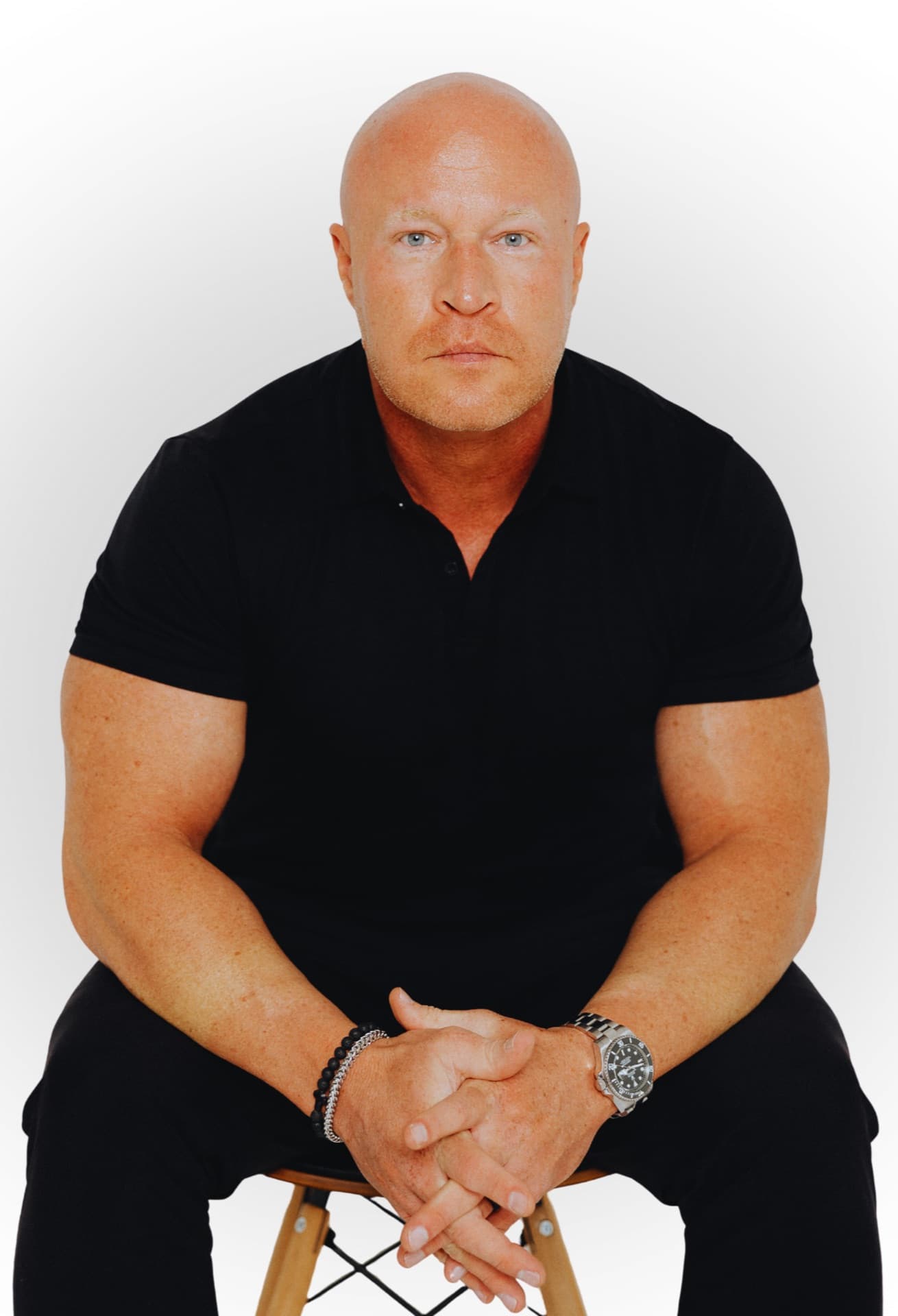
I've been the founder nobody returned emails to
I pitched to rooms that didn't care. I sent decks into inboxes that never opened them. I watched founders with weaker products close rounds I couldn't get a meeting for. Then one night — somewhere around pitch number forty — a thought landed that I couldn't shake: what if the problem isn't my business? What if it's the playbook I'm following?
A family office partner told me something I'll never forget: “We don't fund businesses. We fund missions we can measure.”
That was the AHA. I stopped leading with revenue projections and started leading with impact thesis — Problem, Outcome, Leverage, Measurement. That pivot turned into $500M+ in startup growth revenue, Ivystone Capital, and 400+ family office relationships.
“I didn't get smarter. I got aligned.”
This is 12 months from now
You open your inbox and there's a term sheet. Not because you sent 200 cold emails. Because the right investor found you.
Your P-O-L-M is dialed. Your impact thesis is clear. When you walk into a room, you don't pitch — you align. The investor across the table already wants to fund what you're building. You're just confirming the fit.
The first wire hits your business account. You sit at your desk on a Monday morning with a team Slack that has four people in it. You stop building alone.
That's the founder who burned The Old Playbook and learned the language capital is actually listening for. That founder is you — 12 months from now.
Two founders. Five years from now.
Founder A reads this playbook tonight. Drafts their P-O-L-M by the weekend. Repositions their climate-tech startup around impact thesis. Three months later, they close a $1.5M seed round from an impact fund that found them on a deal platform. Five years out, they're running a funded company — 12 employees, a board, and $4M ARR.
Founder B scrolls past. Sends 50 more cold emails next month. Gets 3 meetings. Zero checks. Five years later — no lead investor. No board. No second hire. Still bootstrapping alone at 11pm, still wondering why founders with weaker products keep getting funded.
Same mission. Same talent. Different playbook.
You didn't build this to pitch into silence
It's 11pm again. But this time you're not refreshing your inbox. You're not wondering if your deck went to spam. You're reading a term sheet from a fund that found you.
That starts with burning The Old Playbook and learning the language capital is actually listening for. You're not pitching anymore. You're aligning. That's what funded founders do.